Services / Cosmetic Dentistry
Porcelain Veneers
Thin, custom-fabricated shells that cover the front of your teeth to correct discoloration, chips, gaps, and minor misalignment.
The Process
What Happens When You Get Veneers
- 1
Consultation
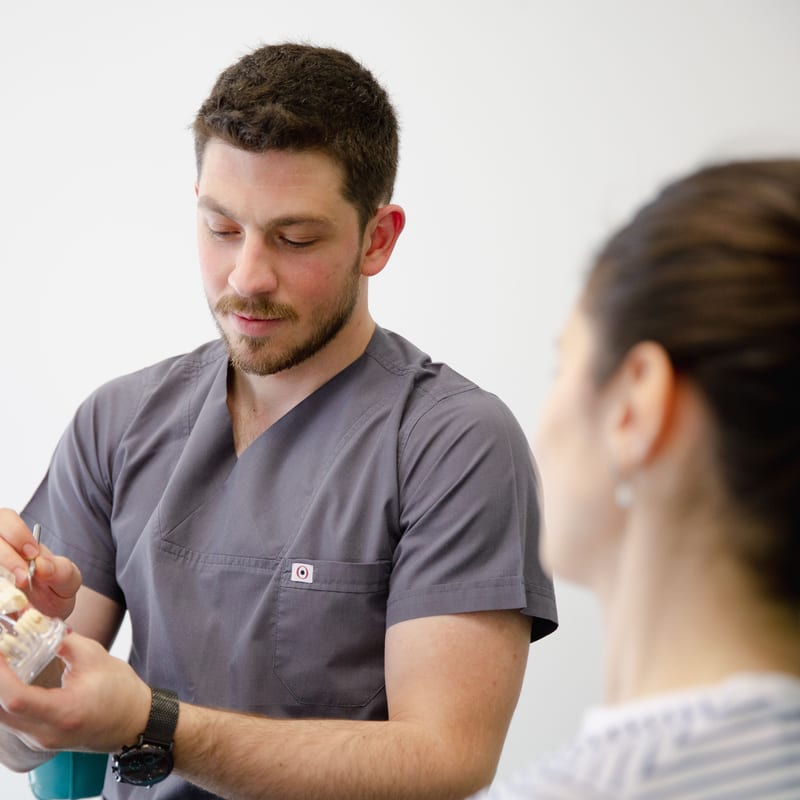
We discuss your smile goals and evaluate whether veneers are a good fit for your teeth.
- 2
Preparation
A thin layer of enamel is removed from the tooth surface to make room for the veneer.
- 3
Impression
A mold of your teeth is taken and used to custom-fabricate your veneers.
- 4
Bonding
Your finished porcelain veneers are permanently bonded to your teeth.
Your Options
Types of Veneers to Fit Your Needs
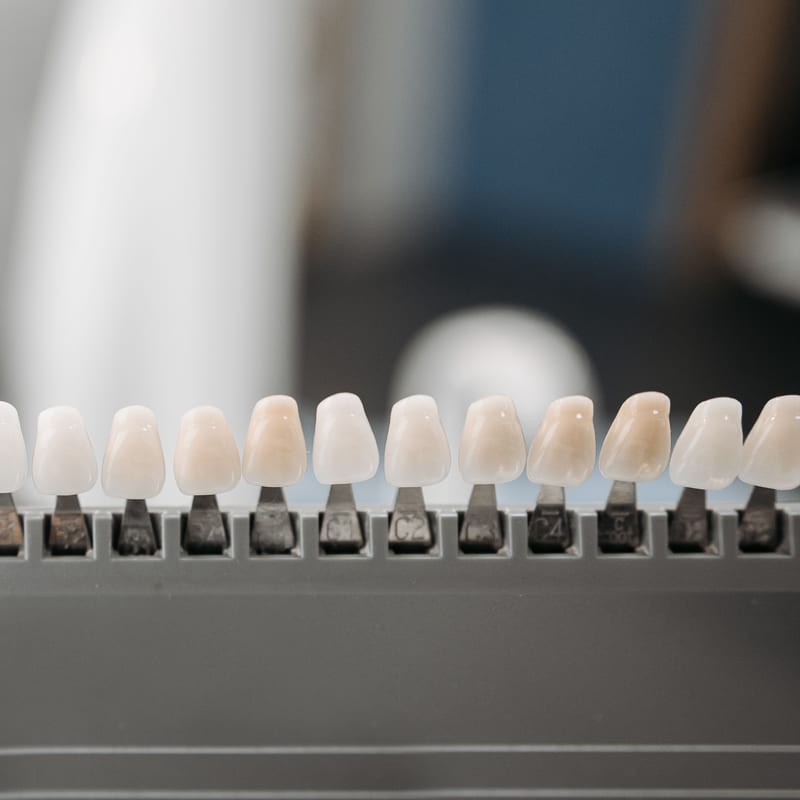
Which type of veneer makes the most sense depends on your goals, your budget, and how much of your natural tooth structure Dr. Kosek has to work with. He'll walk you through the trade-offs during your consultation so you can choose the option that fits your smile and how you plan to care for it.
- Porcelain veneers are fabricated in a dental lab, making them the most durable and most stain-resistant option, though the process is generally not reversible
- Composite (bonding) veneers are shaped chairside in a single visit and cost less upfront, but they tend to need more upkeep and touch-ups over time
- Minimal or no-prep veneers are a more conservative option in select cases, requiring less removal of the natural enamel underneath
Is This Right for You?
Candidacy, Longevity & Ongoing Care
Most patients considering veneers are good candidates as long as they have healthy gums, keep up with regular oral hygiene, have enough remaining enamel for the veneer to bond to, and have a stable bite. Veneers can visually camouflage minor spacing or alignment issues, but they aren't a substitute for orthodontic treatment — if crowding or bite problems are more than minor, Dr. Kosek may recommend addressing those first.
- With good care, porcelain veneers commonly last 10 to 15 years or longer
- Brush with a non-abrasive toothpaste to protect the veneer surface
- Floss around each veneer daily, just as you would your natural teeth
- Wear a nightguard if you grind your teeth, to protect against chipping
- Go easy on hard foods and heavily staining drinks like coffee, tea, and red wine
Porcelain Veneer FAQs
Do porcelain veneers stain?
Porcelain resists staining far better than composite bonding material, so a well-cared-for porcelain veneer should keep its color much longer than a bonded tooth surface exposed to the same coffee, tea, or red wine.
Are veneers reversible?
Composite veneers can generally be reversed, since they’re built up on the surface of the tooth. Porcelain veneers are typically not reversible, because a thin layer of enamel is removed beforehand to give the veneer room to fit and bond properly.
Will my teeth be sensitive afterward?
Some mild, temporary sensitivity to hot or cold is common right after the procedure. It usually fades on its own within a short time as your teeth adjust to the veneer.
Can veneers fix crooked teeth?
Veneers can visually camouflage minor misalignment by adjusting the shape and angle of the tooth’s visible surface. If crowding or bite issues are more significant, orthodontic treatment is usually the better starting point before considering veneers.
Related Care
Often Paired With
-
Tooth Whitening
Brighten remaining natural teeth to match your new veneers.
Learn More -
Dental Bonding
A more conservative option for smaller cosmetic fixes.
Learn More -
Smile Makeovers
Veneers are often a key part of a full smile makeover plan.
Learn More
Begin Your Journey to a Healthier Smile
We're pleased to welcome new patients and their families. Most major dental insurance is accepted, and flexible financing is available so cost never has to be a barrier to care.